
Exploring Joo Chiat: A Digital Cultural Heritage Mission
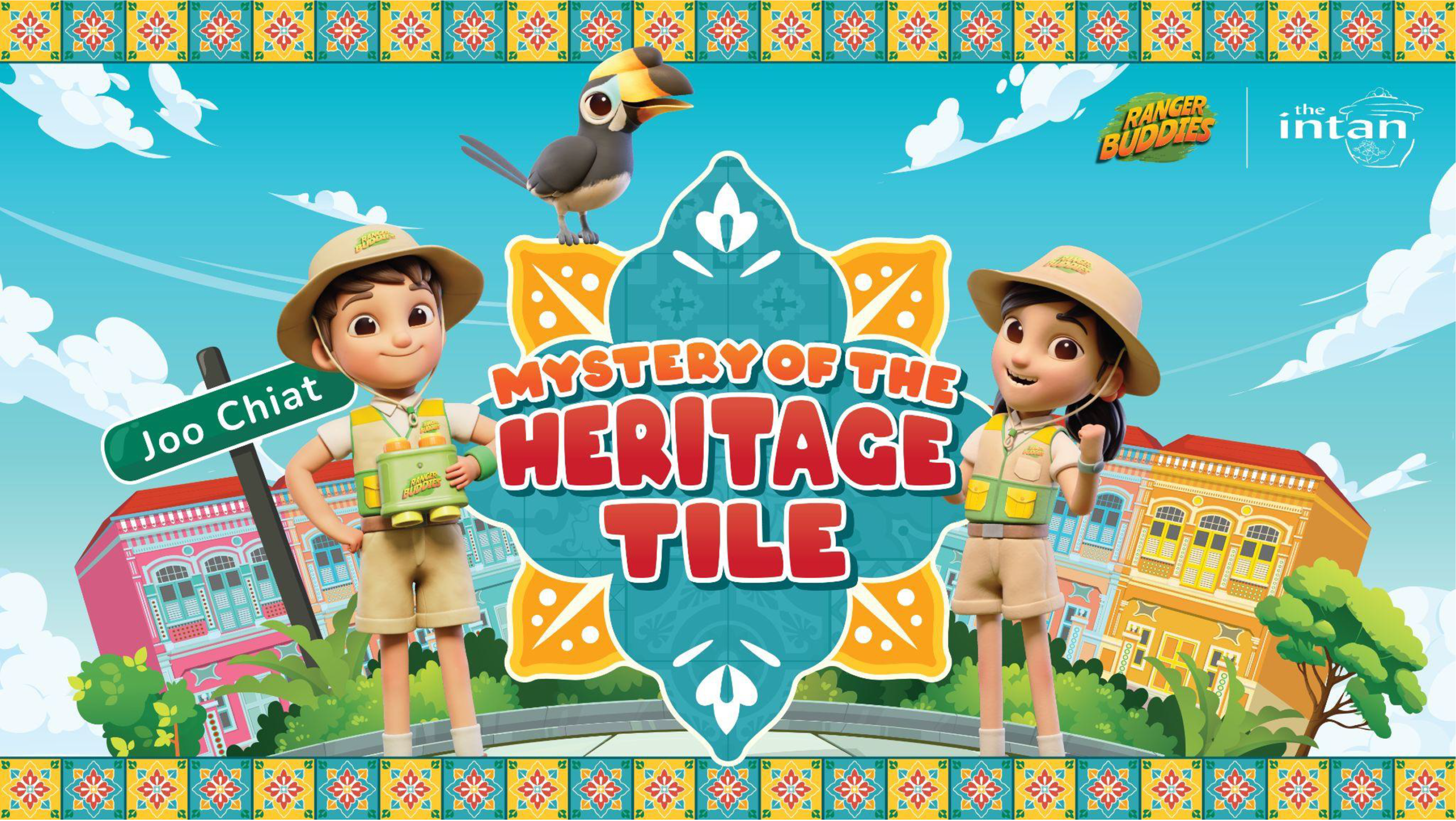
This mission was created in collaboration with The Intan Museum to introduce families to the rich Peranakan culture and heritage of Joo Chiat.
Designed for families with children aged 5–10, it transforms learning into a fun adventure through engaging clues and interactive object-scanning activities throughout the neighbourhood.
Launch date
1st September 2026
Project Duration
Jun - Aug 25
Team structure
Design- myself with the guidance from the head of product, overseeing 2 freelance designers.
Product & dev - 1 product manager, 2 full time engineers and 1 AR engineer.
BD - 1 commercial director.
Product Concept
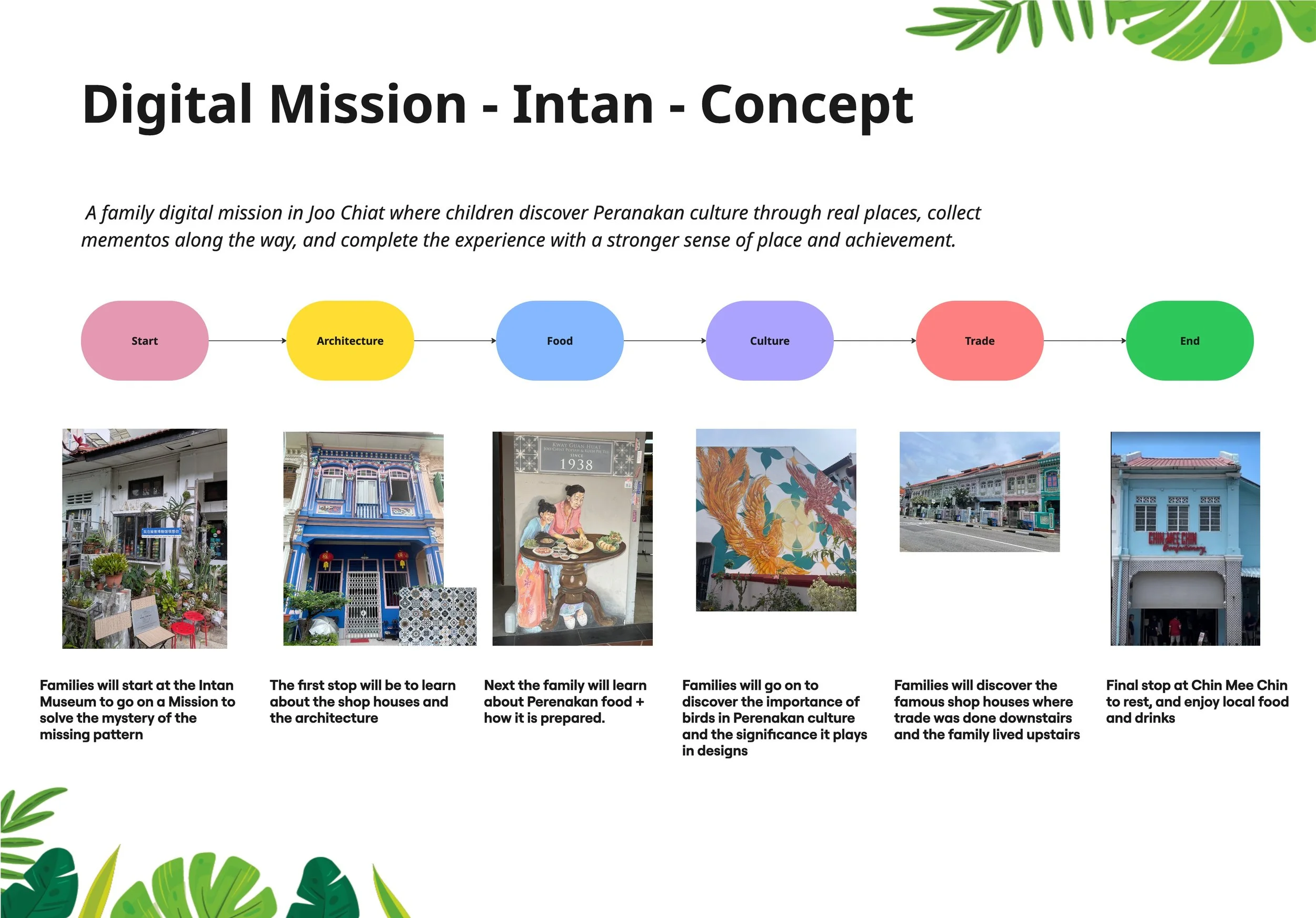
The concept began with the team’s vision to create a family-friendly digital mission that encourages meaningful bonding through shared exploration, while introducing families to the rich Peranakan heritage of Joo Chiat.
The experience guides families to different locations across the neighbourhood using directional cues. At each destination, participants solve a clue to identify a specific object or image before scanning it to collect a digital “stamp.” Each selected location highlights a different aspect of Peranakan culture and Joo Chiat’s heritage, including architecture, food, symbolism, and traditional trades, creating an interactive and engaging way for families to learn and explore together.
Experience Mapping
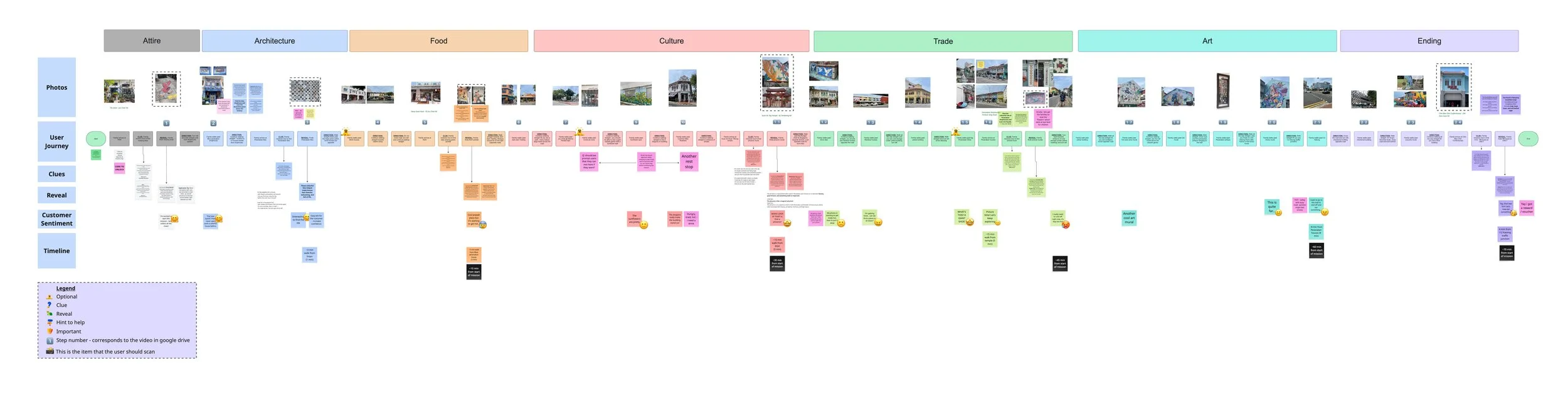
The journey map above represents the third iteration of the experience journey, outlining the user’s journey from start to finish. It highlights key pain points initially hypothesized by the team and subsequently validated through internal team testing and external user experience testing.
Key concerns included Singapore’s hot and humid weather and road crossings with heavy traffic, which could affect the comfort and safety of families, particularly parents travelling with young children.
MVP Roll-Out Product Flow - Second Iteration Designs
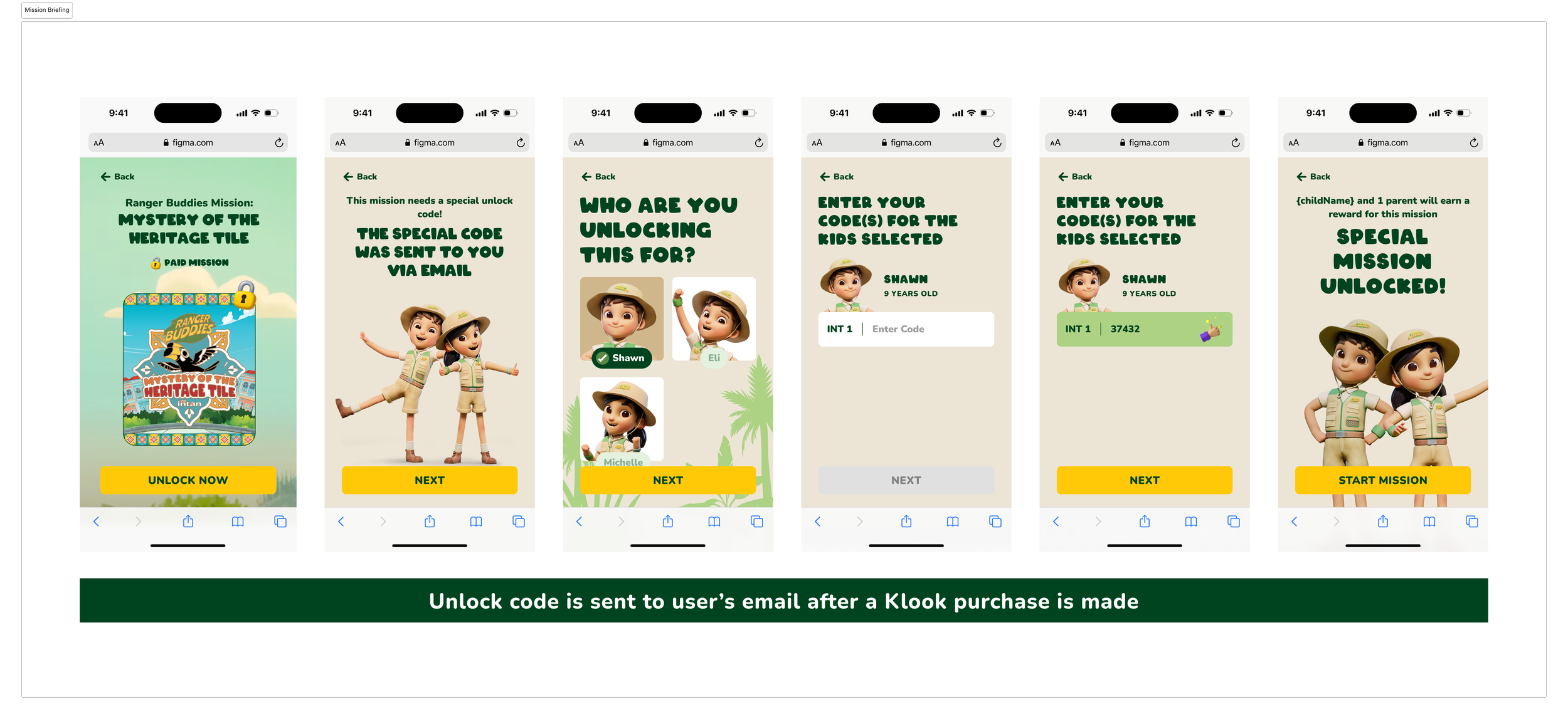
Users can purchase the experience through Klook, after which an unlock code is sent to their email. Before starting the mission, users enter this code on the screens shown above to unlock and access the experience.
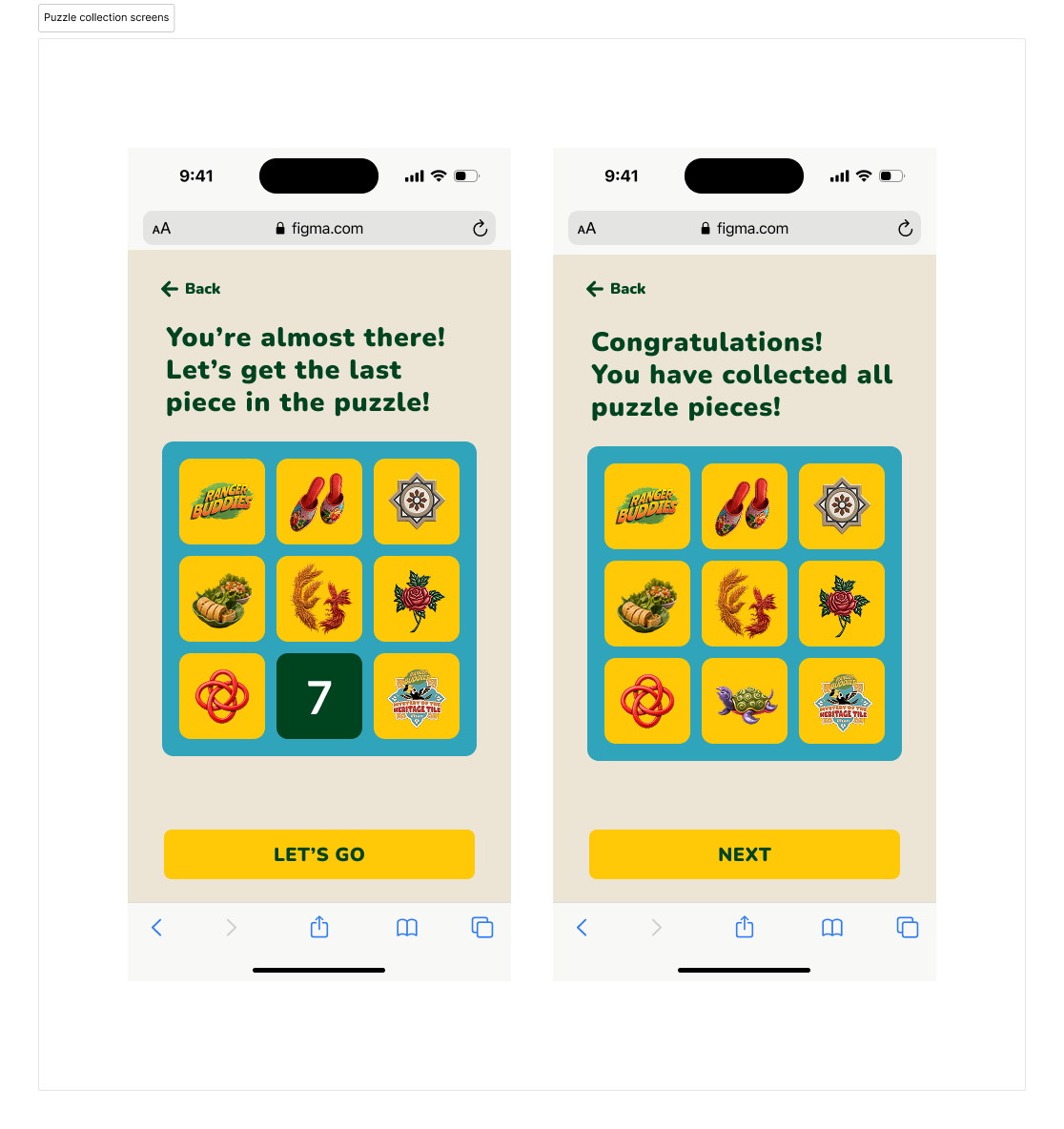
There are total 7 activities, which the user must collect in order to proceed to the next location. The 7 puzzles are translated into total 7 scanning activities + 2 optional family AR selfie activities
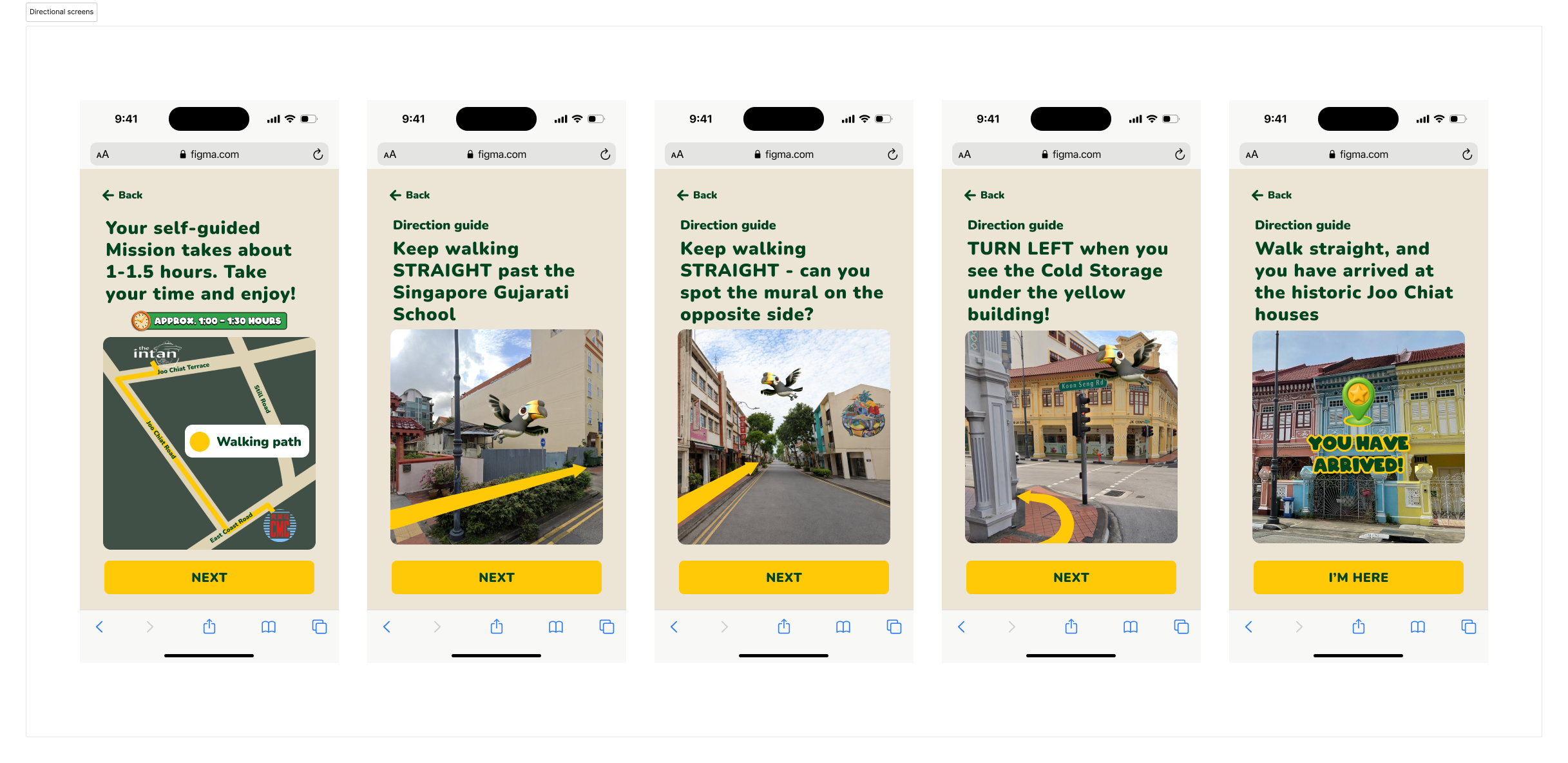
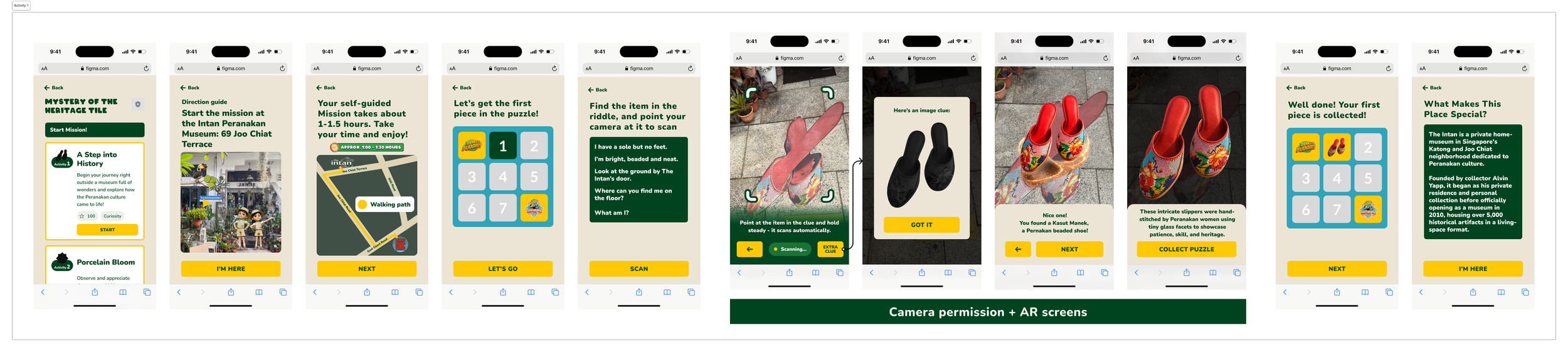
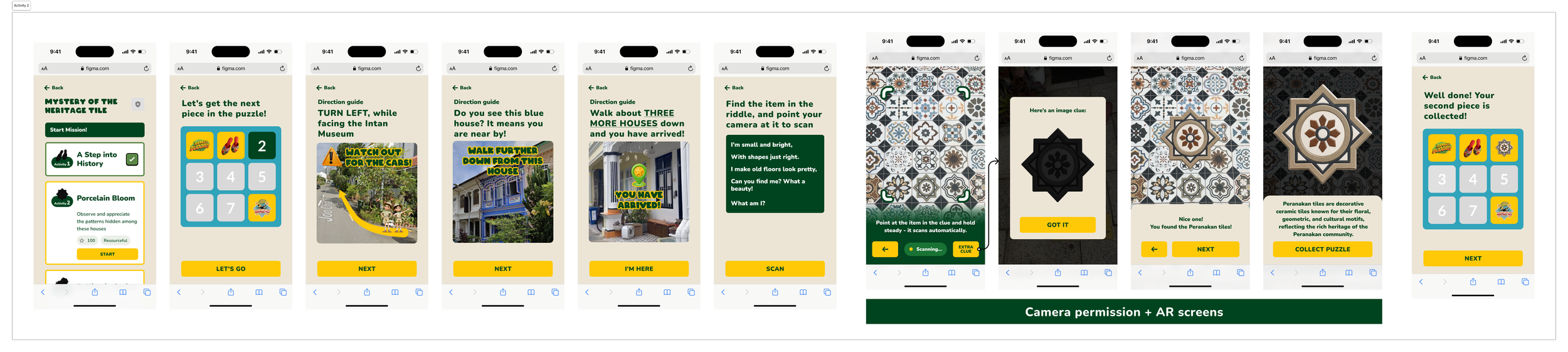
Each activity includes a set of directional guides that leads users to the location of the next clue, where they can scan the correct object to earn a puzzle piece. These guides are currently created manually. In future iterations, the team may explore Google Maps integration or alternative navigation solutions, informed by findings from user testing.
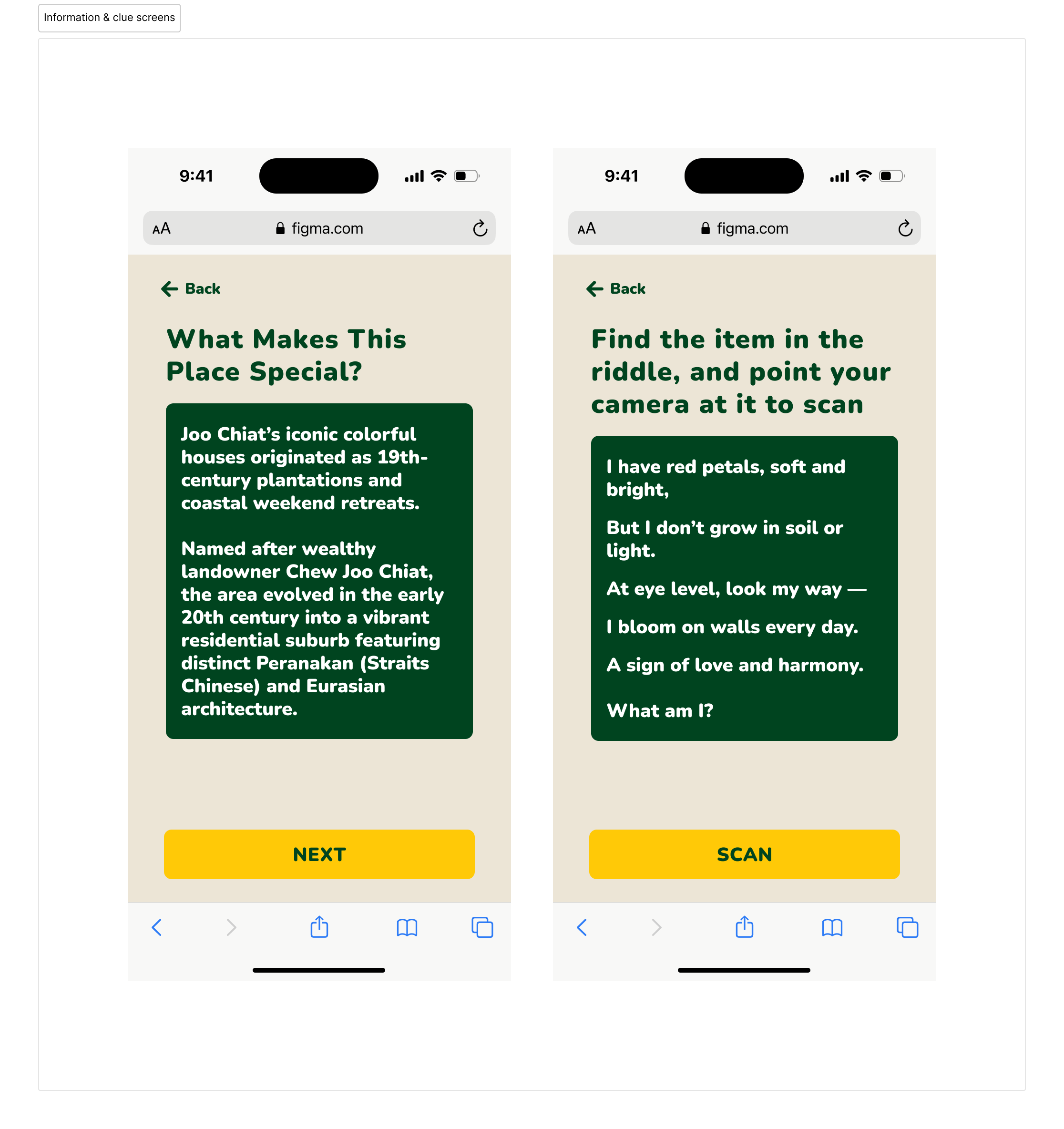
The two screens on the left represent the information and clue screens, designed for parents to read and share with their children. The interface is intentionally kept simple and minimal to maintain focus on the content without unnecessary distractions.
The two screens on the right show key moments within an activity: the initial prompt to collect the next puzzle piece and the success screen displayed once the puzzle piece has been collected.
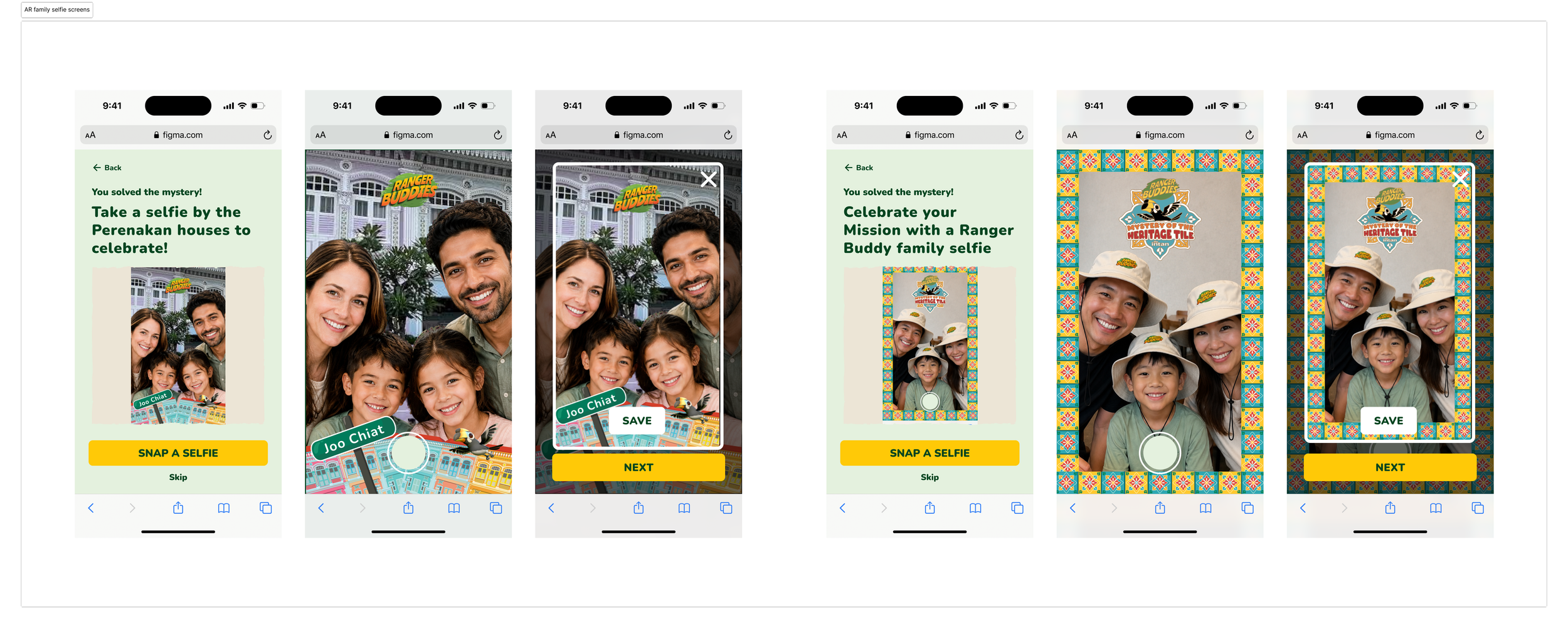
Two optional selfie activities are included, allowing families to capture memorable moments from their journey and keep them as digital souvenirs of the experience.
Activity Screens:
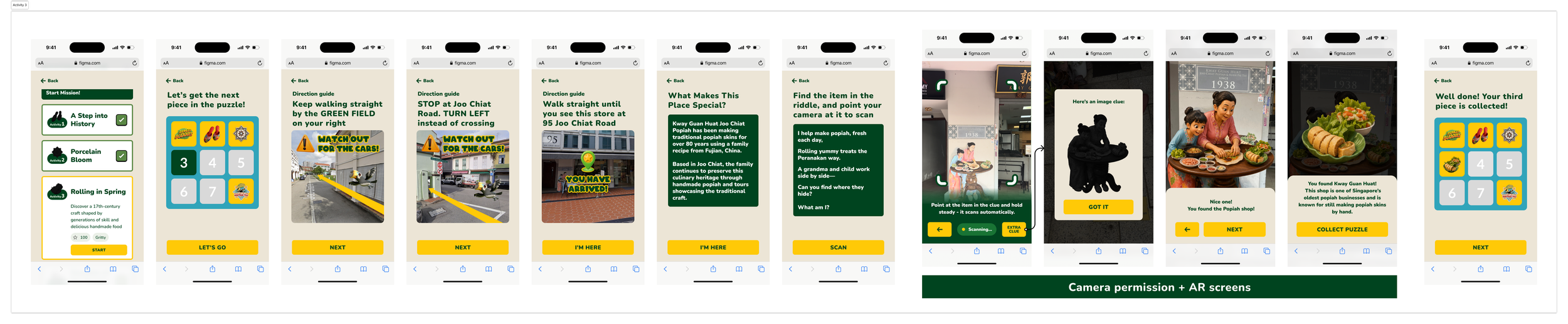




Once users complete all activities and assemble the final puzzle, they are guided to Chin Mee Chin Confectionery, a historic café/restaurant operating since 1925. There, families can enjoy a complimentary bun set and redeem a goodie bag containing a branded mission badge, fan, sticker sheet, and tote bag.
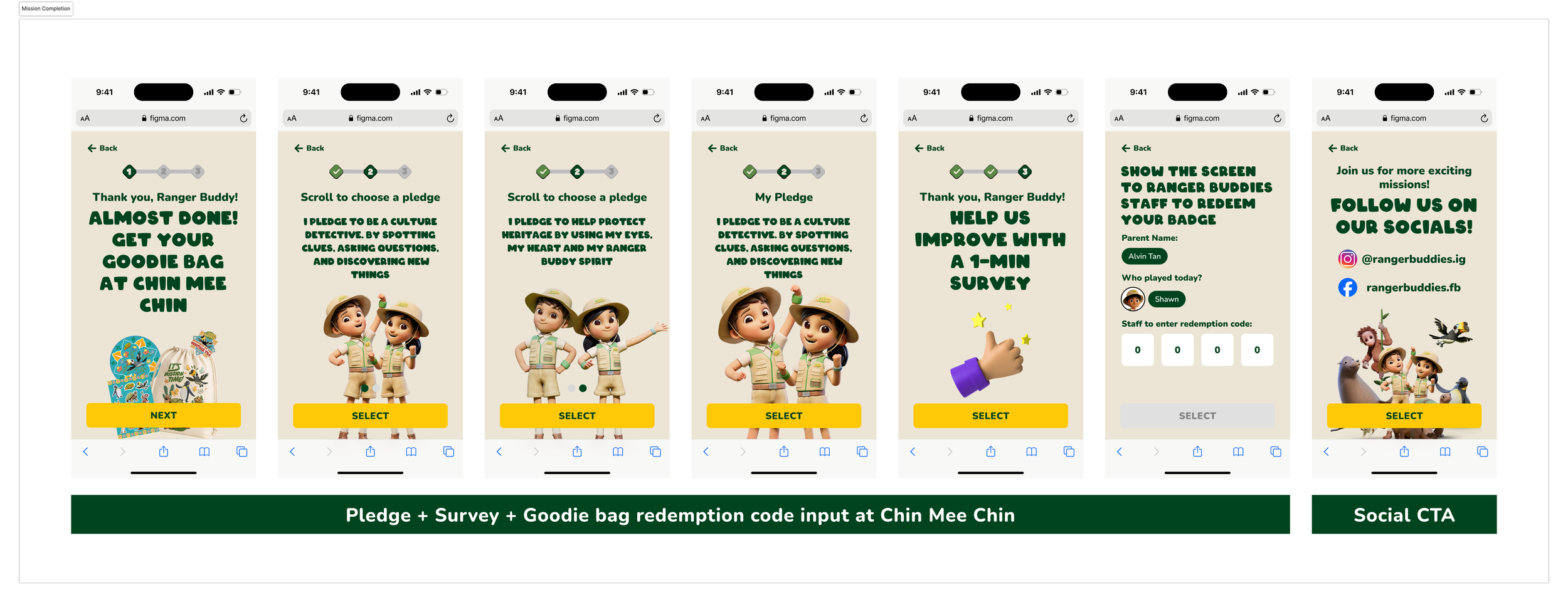
Users select a pledge and are then prompted to enter a code provided by the restaurant staff to proceed.
User Experience Test & Outcomes
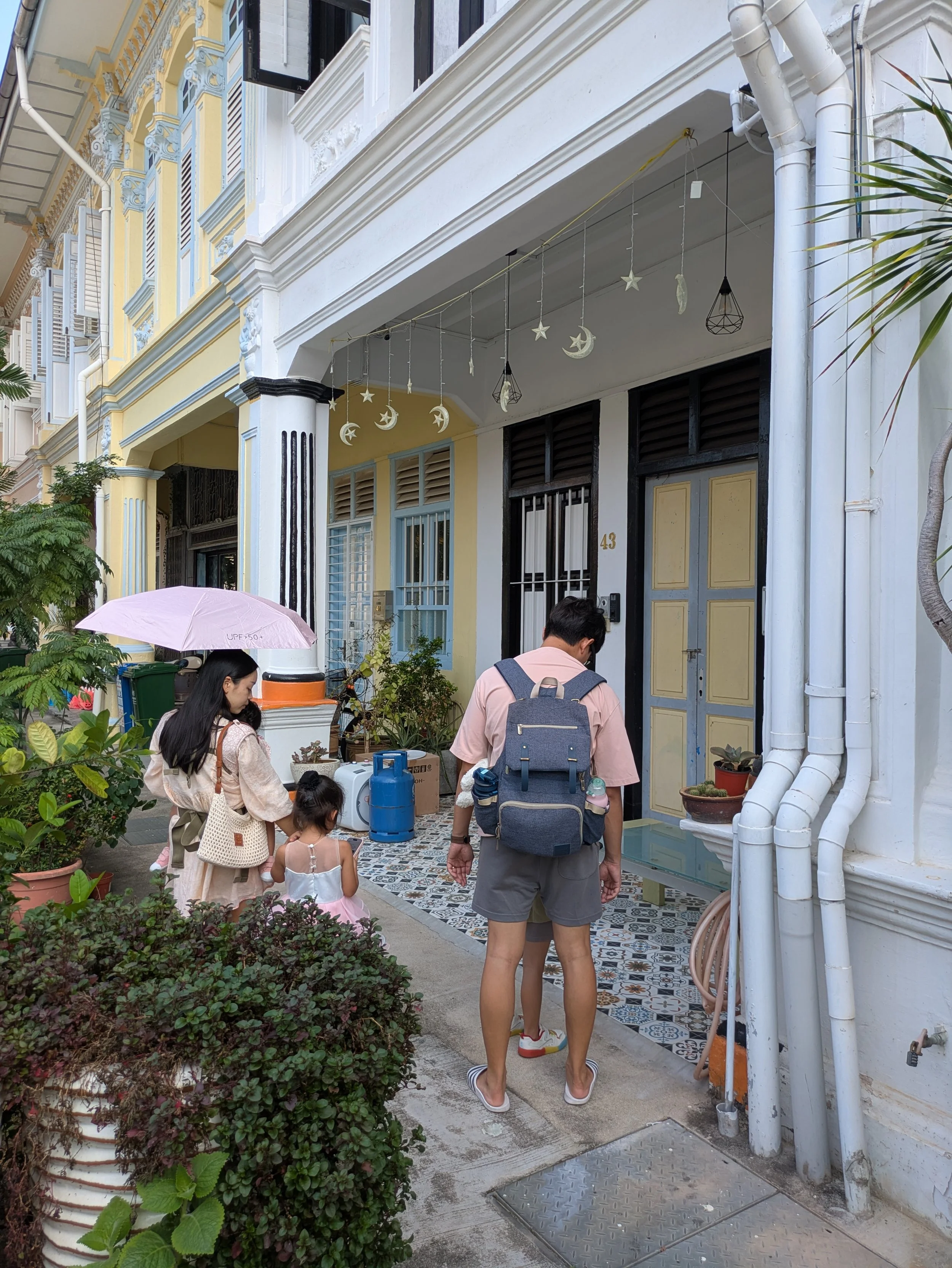
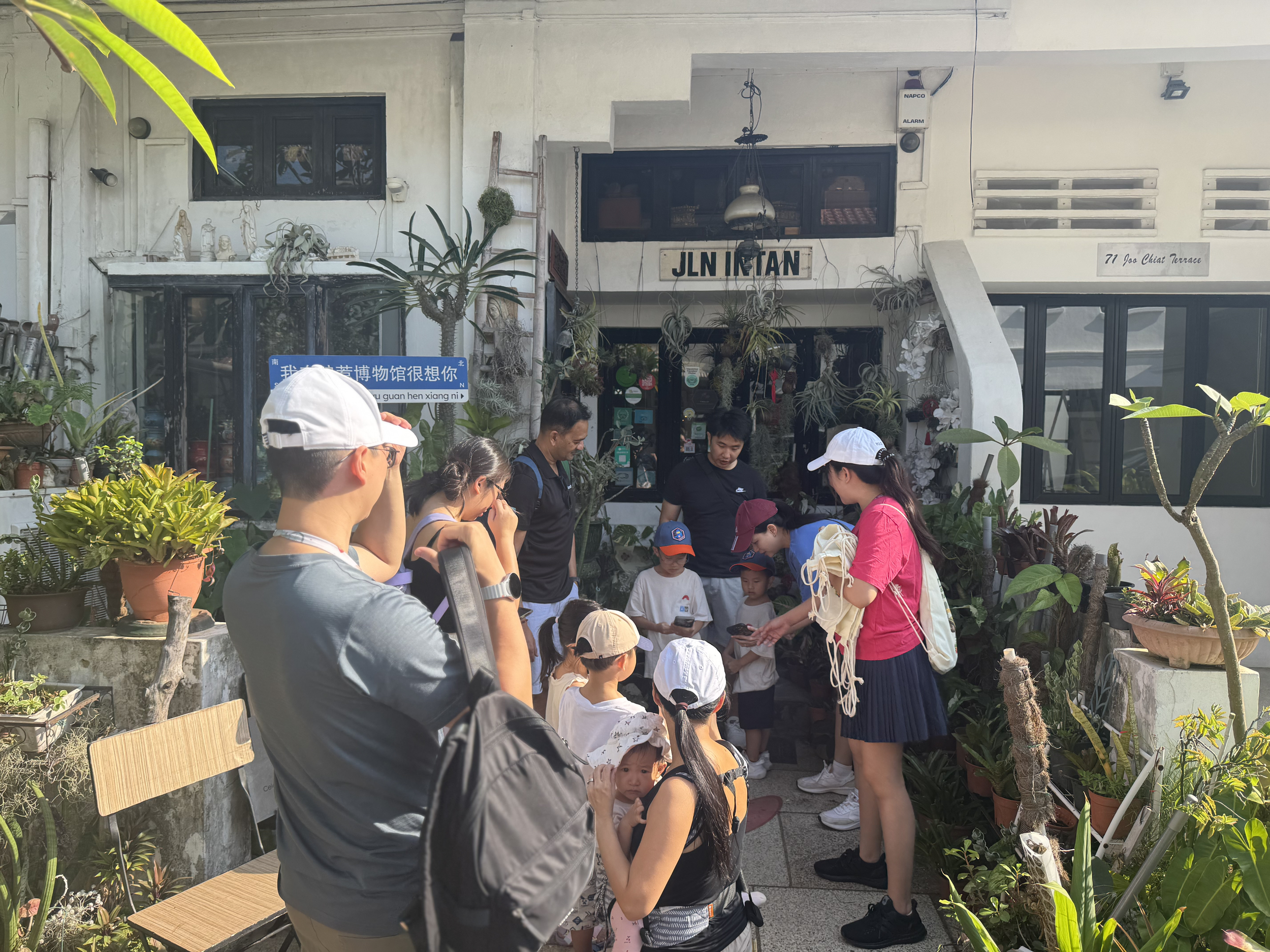
Shortly after the first prototype was developed, the team conducted two user testing sessions with 12 families along the mission trail.
Qualitative feedback was captured through observations and conversations during the experience, while quantitative feedback was collected through post-mission surveys.
Key quantitative metrics are as follows:
CSAT: 73%
NPS: +36
% of users that would pay: 40%
Child desirability: 4/5
Meaningful outing rate: 4/5
Navigation ease: 3.8/5
Instruction clarity: 4.2
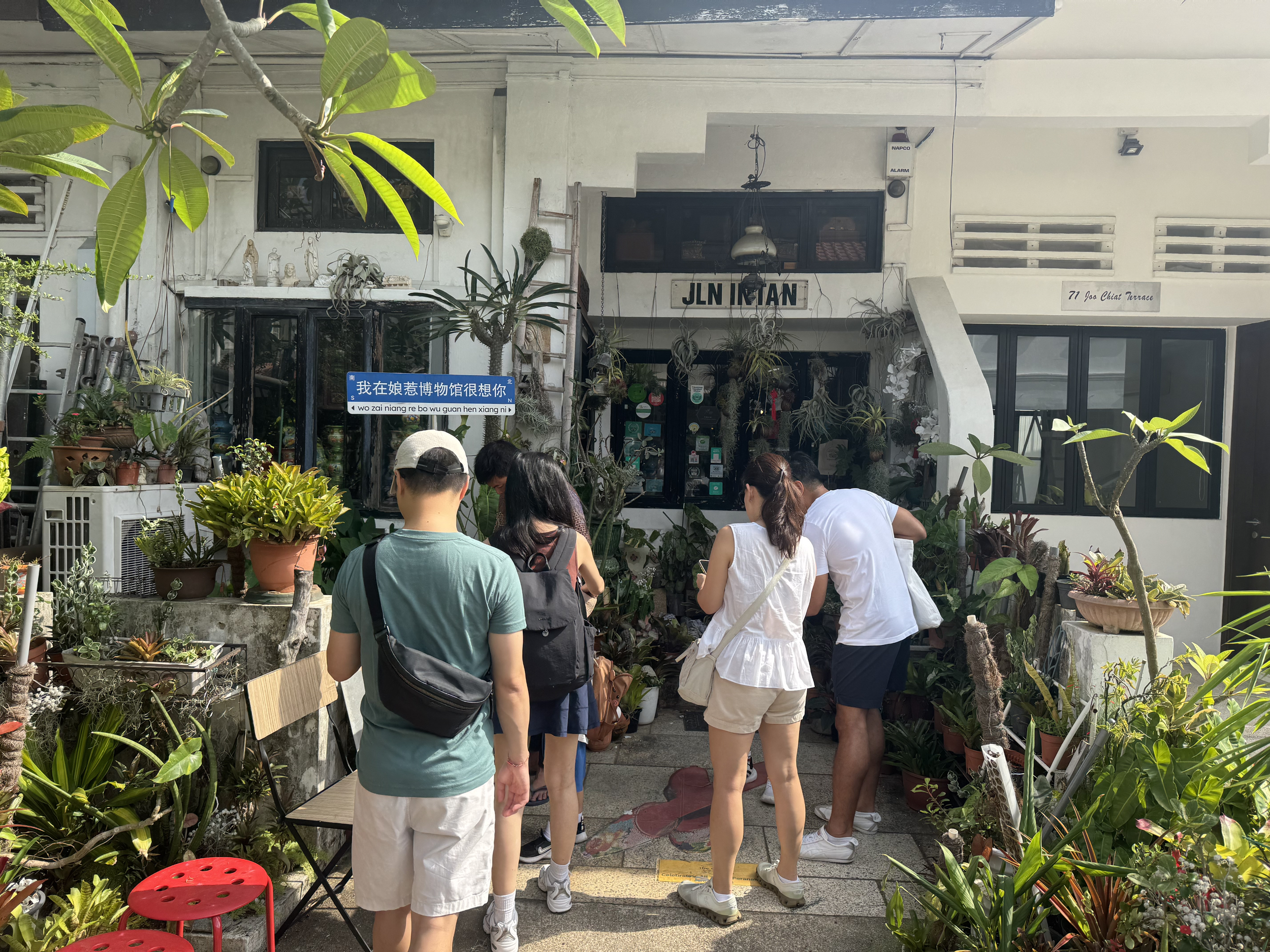
Research Findings Synthesis
The collect-and-scan mechanic was the strongest part of the experience.
Five out of six children identified clue-finding, scanning, or collecting puzzle pieces as their favourite activity, with one specifically wanting to collect every piece. Murals were particularly effective scan targets as they were distinctive, easy for children to recognise, and simple for parents to identify.Families valued having a shared goal and exploring together.
Testing showed frequent parent-child discussion, cooperation, and shared problem-solving. Parents typically led navigation and storytelling, while children took ownership of scanning and collecting. Older children (7+) were more likely to lead the exploration, while parents supported younger children (4–6) with reading. This also presents opportunities for post-mission engagement, such as follow-up content and recommendations for other trails.Storytelling and navigation needed to be strengthened.
While scanning was a clear highlight, families wanted more cultural and historical context about the locations they visited. Navigation also needed improvement, with directions broken into clearer, location-by-location steps to help families focus on one destination at a time.Heat and walking fatigue became significant towards the end of the journey.
Families reported feeling hot and tired by the fifth location, with the final walk to Chin Mee Chin perceived as too long. In response, two additional stops were introduced to improve pacing and reduce walking fatigue. Commercial partnerships with air-conditioned cafés along the route are also being explored, offering vouchers that provide families with opportunities to rest and recharge during the experience.
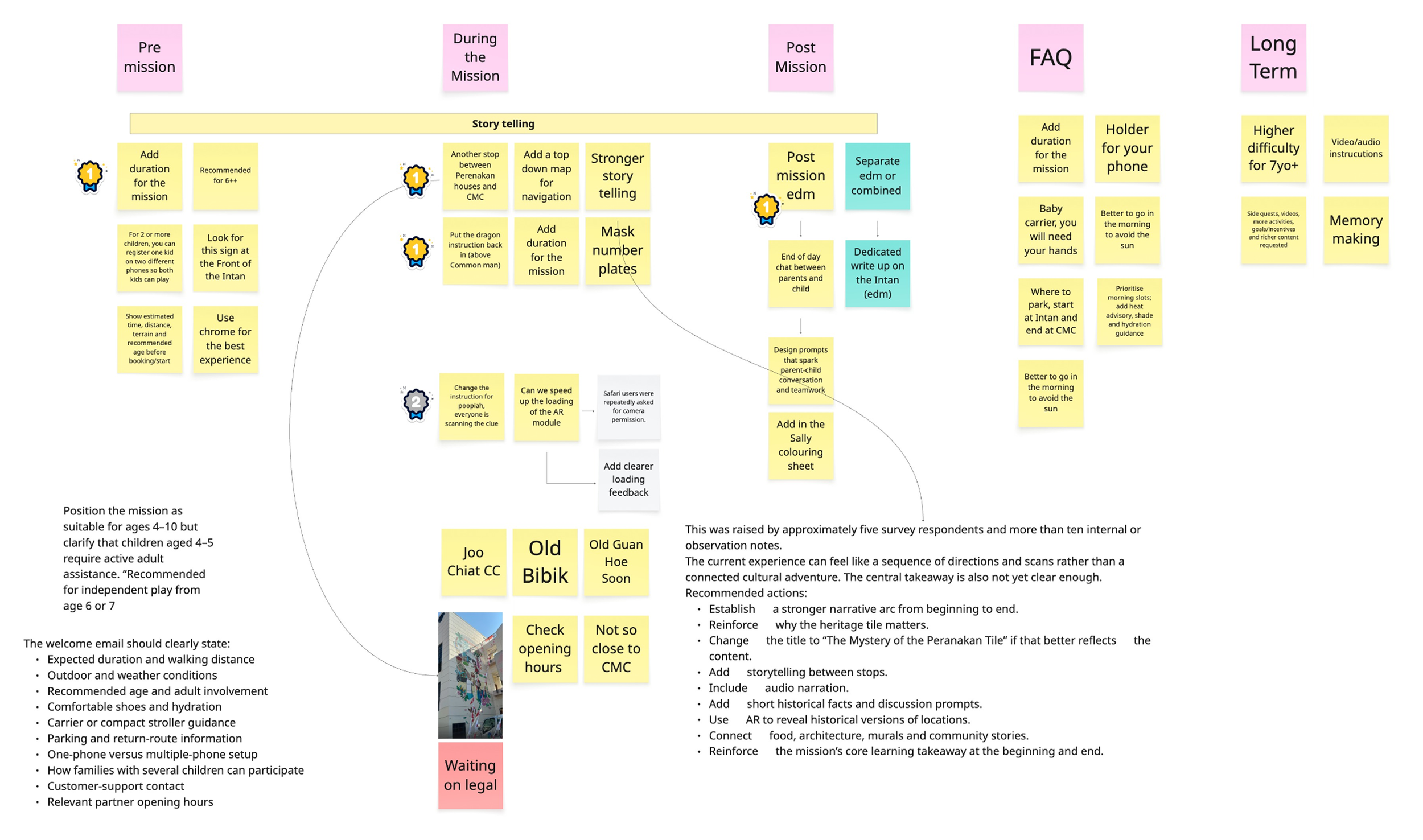
Based on the insights above, few top priorities design addition and editions came up as top priority items:
Immediate Changes & Implementation
Display the estimated duration and total route distance at the start of the mission to set clear expectations.
Add two additional stops and scanning activities between the Joo Chiat houses and Chin Mee Chin to improve pacing and reduce walking fatigue.
Break navigation into shorter, step-by-step directions, with larger images that are easier to follow.
Introduce post-mission EDMs featuring the locations visited, alongside recommendations for upcoming missions and future trails.
Key qualitative comments are as follows:
Puzzle collection and scanning was the strongest gameplay element
Approximately eight responses or comments valued the opportunity to learn about Peranakan culture, explore Joo Chiat and discover unfamiliar locations
Three children selected the completion goodie bag as their favourite element
Product Backlog
Create an automatically stitched memory video as a personalised digital souvenir for families.
Explore automated and interactive wayfinding solutions to improve navigation and directional guidance.
Include an AR colouring activity in the goodie bag, reflecting strong interest in colouring among children during user testing.
Introduce video and audio content to make instructions and educational information more accessible and engaging.
Add difficulty levels for children aged 7+ to provide a more challenging experience for older participants.
Introduce side quests, bonus activities, and additional rewards to encourage deeper exploration and continued engagement.